Why the bottom line misleads
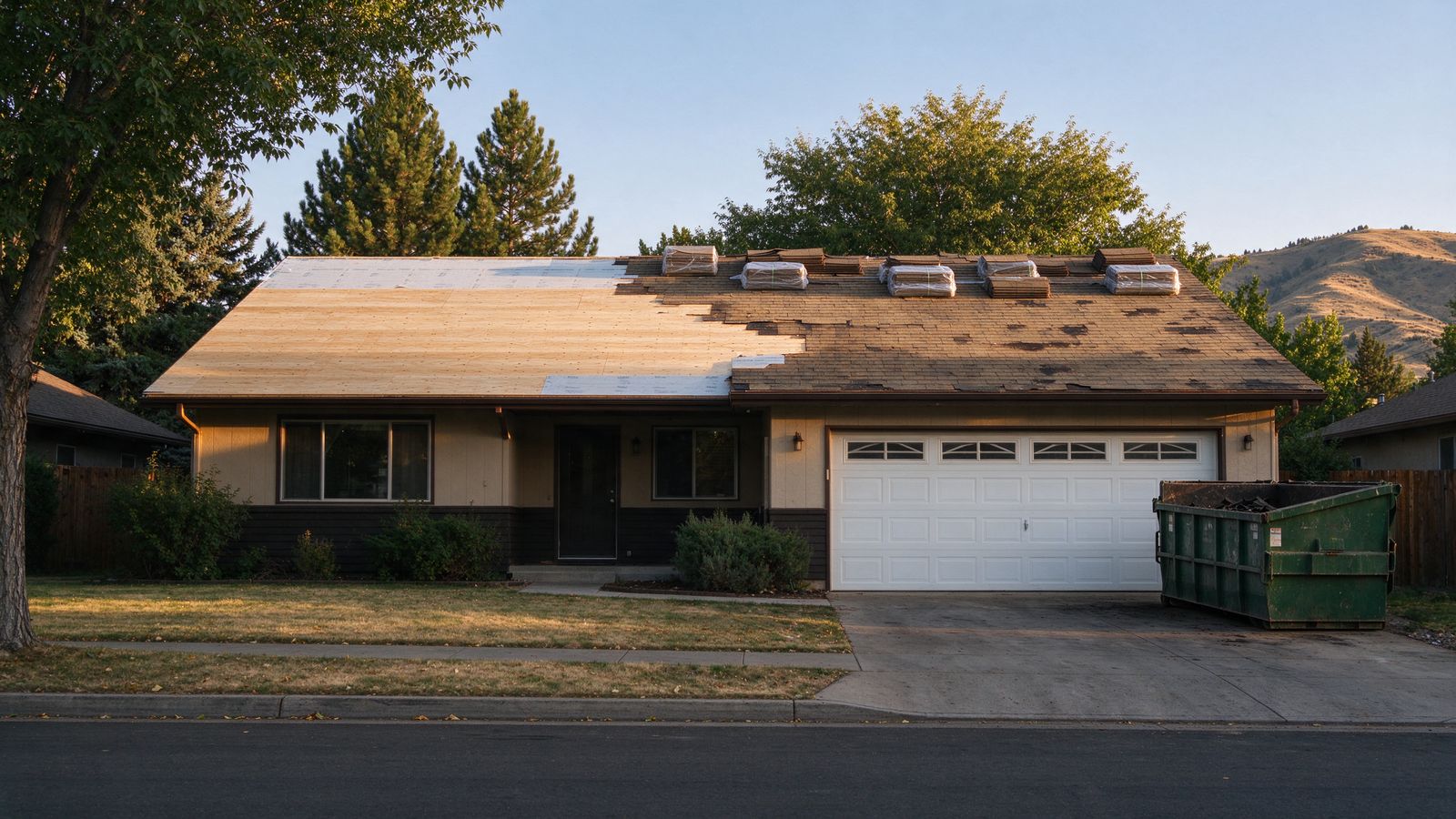
A low bid is often low because something is missing, not because the roofer is more efficient. One estimate includes new flashing at the chimney; another quietly plans to reuse the old metal. One includes replacing a few sheets of rotten decking; another lists decking as "extra, as needed" with no unit price. Put those two side by side and the cheaper one may become the more expensive one the day the old shingles come off.
So the rule is simple: compare scopes first and totals last. This page does not cover which shingle or metal panel to choose. That is a materials decision, and it should already be settled (or at least narrowed) before you ask for bids, so every roofer prices the same product. What follows is how to make sure they are also pricing the same work.
The lines that decide the difference
Most residential roofing estimates in the valley can be read against the same short list. If a bid does not mention an item at all, mark it unclear rather than assuming it is included.
-
Tear-off.
Removing every existing layer exposes the deck so problems can be found. A bid that layers over old shingles is a different job; ask whether your city and the manufacturer allow it at all.
-
Underlayment.
The sheet layer under the shingles. Bids should name the type and where it goes, not just "underlayment included."
-
Flashing.
Metal at walls, chimneys, skylights and pipes. "Reuse existing" and "replace" are very different promises.
-
Ventilation.
Intake at the eaves and exhaust near the ridge. Changing the roof is the cheapest time to correct ventilation, so ask what is planned and why.
-
Decking.
Damaged sheathing is only visible after tear-off. Look for a unit price per sheet and a promise to show you the damage first.
Beyond those five, check the smaller items: drip edge at the roof edges, ice barrier at the eaves and in valleys (useful where snow sits and melts in the Treasure Valley's freeze-thaw cycles), ridge cap, pipe boots, and what happens with gutters during the work. Each one is modest on its own. Together they explain most of the spread between bids.
Bid worksheet: line them up
For each line, choose what each bid says. The worksheet highlights the rows where the bids disagree. Those rows are your list of questions. Nothing you enter leaves your browser.
| Line item | Bid A | Bid B | Bid C | Status |
|---|---|---|---|---|
| Full tear-off of existing layers | Check | |||
| Deck inspection and replacement terms | Check | |||
| Underlayment type and coverage | Check | |||
| Ice barrier at eaves and valleys | Check | |||
| New drip edge | Check | |||
| New flashing at walls, chimney and pipes | Check | |||
| Ventilation (intake and exhaust) | Check | |||
| Permit and inspection | Check | |||
| Cleanup, haul-away and magnet sweep | Check |
Allowances, unit prices and the unknowns
Some costs cannot be known until the roof is open. Good bids handle that honestly with a unit price: so much per sheet of decking, so much per linear foot of fascia. Weaker bids say "additional work billed as needed," which leaves the number entirely to the contractor after you have committed.
The most common dispute on a reroof is decking. The old shingles come off, the crew finds soft or delaminated sheets, and the homeowner is told on the spot that half the roof needs new wood. Protect yourself in the bid: ask for the unit price, ask that the crew photograph or show you the damage before replacing it, and ask that the final invoice list the number of sheets replaced.
Watch for allowances that look generous but are tied to vague language. "Up to two sheets of decking included" is useful only if the bid also says what each additional sheet costs.
Questions that turn a bid into a scope
- Does this price include a full tear-off to the deck?
- What exactly is the underlayment, and where does ice barrier go?
- Is every piece of flashing new, and how is the chimney handled?
- What is the ventilation plan, and does it change anything existing?
- What is the decking unit price, and will I see the damage first?
- Who pulls the permit, and is the inspection included?
- How is cleanup handled, including gutters and a magnet sweep?
- What workmanship warranty comes with this bid, in writing?
Send the same list to every roofer by email so the answers are in writing. Then update the worksheet. Usually one or two bids firm up and one goes vague, which makes the choice easier.
Choosing between bids that now match
- two scopes match and the totals are closechoose on communication, schedule and warranty terms
- one bid is far lower after matching scopesask what explains it before treating it as a win
- a roofer will not put answers in writingtreat the verbal answer as not included
- you are asked to decide today for a special pricesee the red flags guide
Once you have a winner, the bid needs to become a proper agreement. The contracts and payments guide covers what should be in it. If you still need contractors to bid, you can ask to be matched, and vet each one the same way.