

The week before the crew arrives
Ask the roofer for the expected start date and what could move it. Weather is the usual reason: crews avoid tearing off a roof when rain or strong wind is likely, and very cold days can affect how some materials seal. A short delay for weather is a sign of care, not a problem.
Then get the house ready. Move cars out of the driveway and garage if the dumpster or material drop needs the space. Take pictures, mirrors and shelf items off walls on the top floor; nailing sends vibration through the framing. Cover anything stored in the attic, because dust and granules can fall through gaps in the sheathing. Plan for pets and small children to be somewhere quieter. Tell close neighbors, especially if the dumpster will sit near a shared property line.
Who is the crew lead, and what is that person's number? What time does the crew usually start? Where will the dumpster go, and how will they protect the driveway surface? Get these answers before the day, not at 7 a.m. on it.
Tear-off and the moment the deck is exposed
The crew usually starts by laying tarps over landscaping and along the walls, then strips the old shingles and underlayment down to the wood deck. This part is fast and noisy. Debris goes straight into the dumpster or onto tarps.
Once the deck is bare, the crew walks it and looks for soft, rotted or delaminated sheathing. This is the point in the day where your contract matters most. If replacement is needed, you should be shown the damage or sent photos, told how many sheets, and given the unit price from your contract before the work is done. A good crew does this without being asked.
The deck is also the best place to check for problems that caused the old roof to fail early: dark staining around a vent, soft areas along a valley, or signs that the attic has been running damp. Ask the crew lead what they found. It may affect your ventilation plan or your maintenance later.
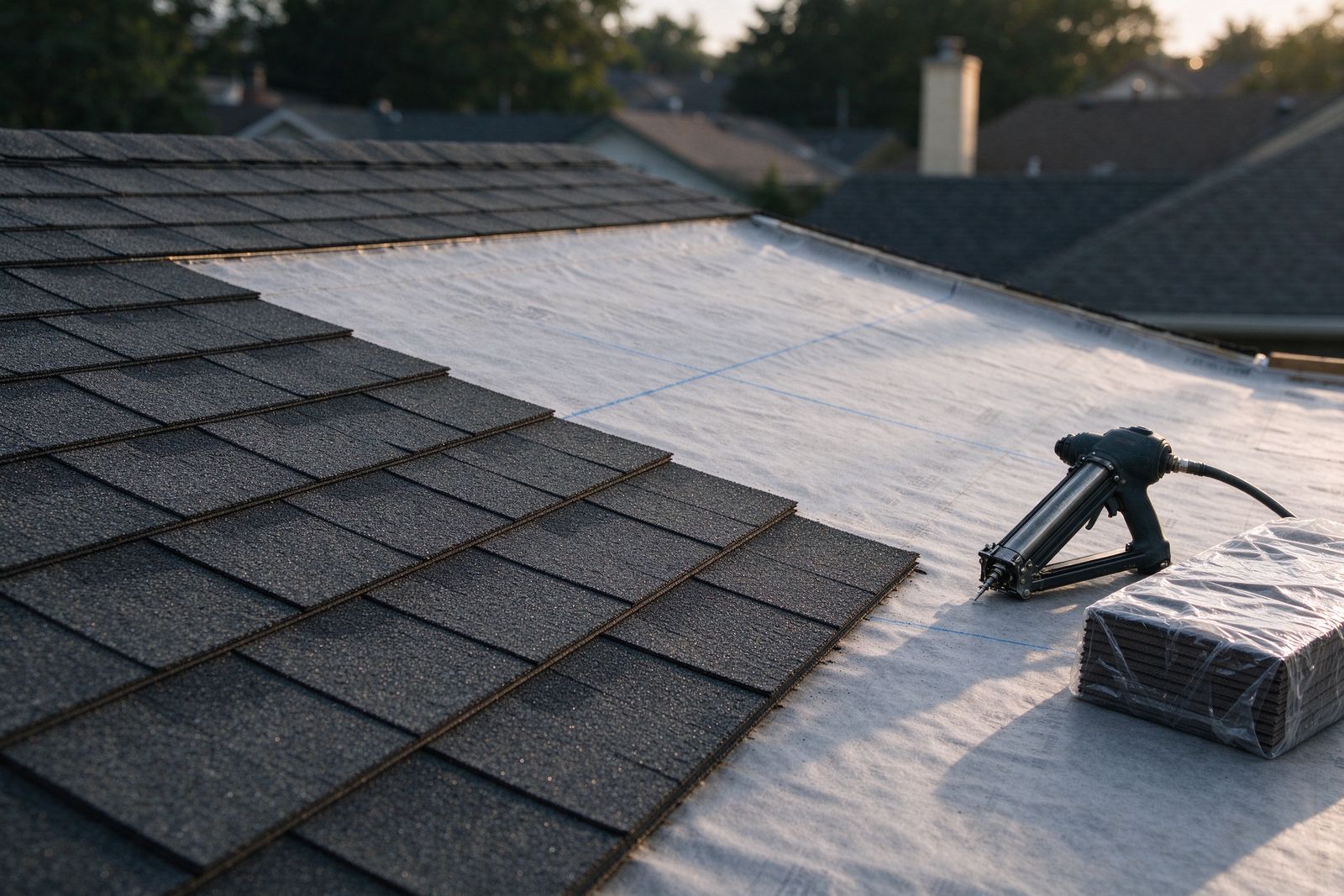
The details worth a look
You do not need to climb on the roof, and you should not. From the ground and from photos the crew sends, you can still notice the things that separate careful work from rushed work.
- Straight courses. Crews snap chalk lines across the underlayment to keep shingle rows straight. Wavy rows seen from the street are a sign of rushing.
- Flashing at transitions. Where the roof meets a wall, a chimney or a skylight, there should be metal flashing woven in with the shingles. Ask whether it was replaced, as your contract should say.
- Drip edge and eaves. Metal along the edges, with underlayment and ice barrier lapped correctly at the eaves.
- Pipe boots and vents. New boots around plumbing vents and properly installed exhaust at the ridge, matching the ventilation plan.
If you see something that does not match the contract, raise it with the crew lead calmly and promptly. It is much easier to fix flashing before the shingles over it are finished than after.
Permits and inspections, in general terms
Many cities in the Treasure Valley require a building permit for a reroof, and the requirements differ between Boise, Meridian, Nampa, Eagle and the rest of the valley, as well as unincorporated areas in the county. Most commonly the roofer applies for the permit and arranges the inspection, which can happen during the job, at the end, or both, depending on the jurisdiction.
You do not need to become an expert in your city's rules. You need three answers: whether a permit is required for your job, whose name it is under (it should be the contractor's), and when the inspection will happen relative to your final payment. Check the current requirements with your city's building department, since rules and processes change.
Cleanup and the magnet sweep
A reroof sends nails, staples, shingle scraps and granules everywhere: into flower beds, gutters, window wells and the gaps between pavers. The contract should require debris removal and a magnetic sweep, and you should see it happen.
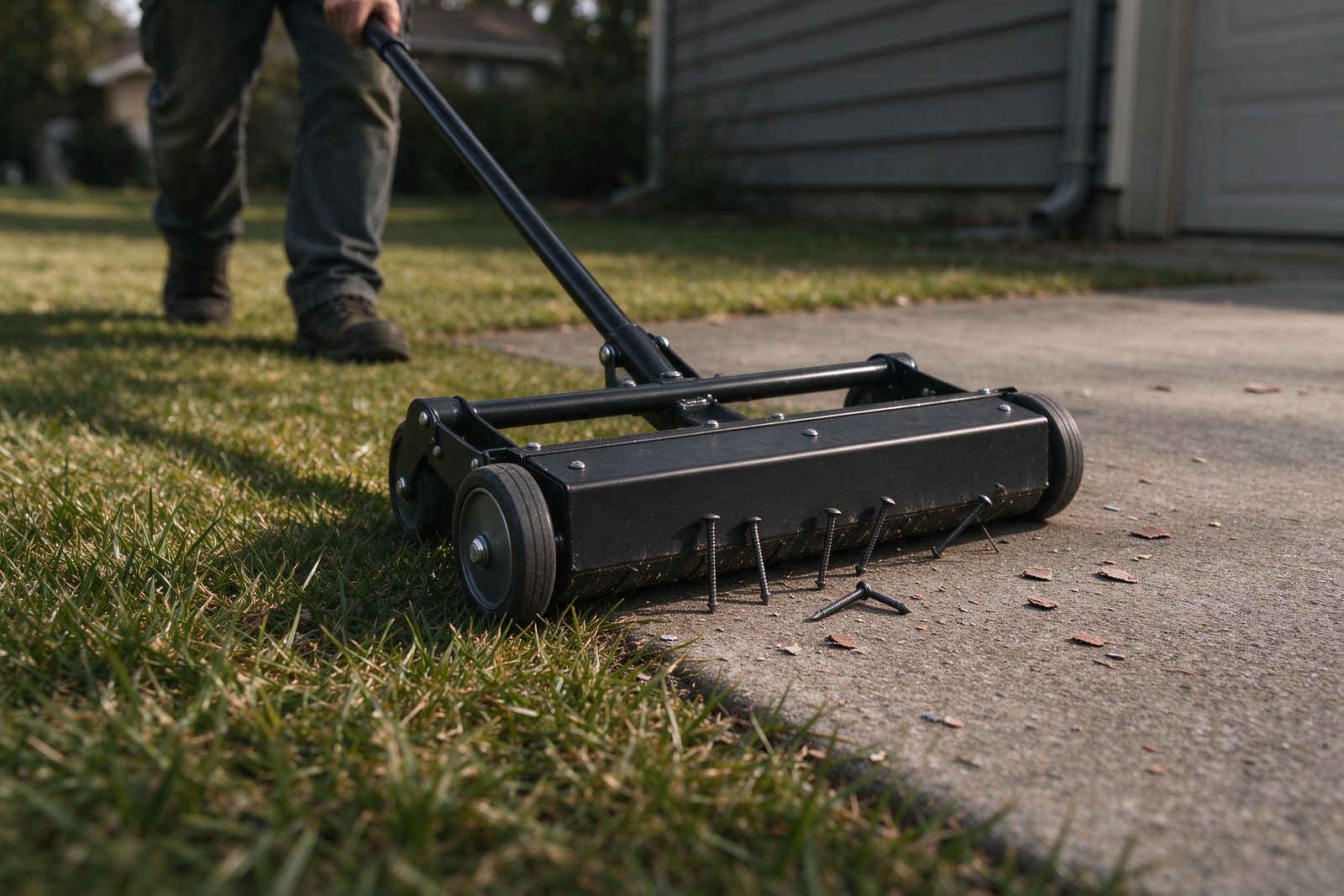
A rolling magnet is pushed in overlapping passes across the lawn, driveway, beds and the street edge, often more than once. Ask for a pass along the street in front of the house and the neighbor's side yard if debris went that way. Gutters should be cleared of granules and scraps. Downspouts should run freely.
A few days after the job, walk the yard yourself in low morning or evening light. Nails catch the sun. If you find more than a stray one or two, call the roofer and ask for another sweep before the lawn mower finds them.
The final walk, then the final payment
Before the last payment, walk the property with the crew lead or project manager. Look at the roof from every side of the house, check the gutters, look in the attic for daylight or fresh debris, and confirm the cleanup. Ask for the paperwork: final lien waivers, the passed inspection if one was required, and the warranty documents covered in the warranties guide.
Only then release the final payment set out in your contract. Afterward, keep everything in one folder, because you will want it for the maintenance years and any warranty claim.